Tuesday, October 8, 2024

home at last


I'm baaaack! Well, let's just say I'm back home physically following the trip of a lifetime with my daughters to Italy and Switzerland, even though part of me is still there...mentally, emotionally, and spiritually...still overawed by the immense beauty of the Alps, and the expansive wilderness that felt like home to me, at last.

"The mountains are calling,
and I must go."
~John Muir~


I decided not to post a whole gallery of photos (I have hundreds of them...) because, as we all know, the pictures we take never seem to capture the grandeur of the reality we are witnessing. They don't reflect the emotions we feel in that place, at that moment. They serve as tokens of our experience, but don't resonate with others the way they do for us. 

"The wilderness is healing,
a therapy for the soul."
~Nicholas Kristoff~


Meaning, you must experience it for yourself. You must go. 

Here is my advice:
  • While you're thinking about where you'd like to go, save your money. Pass on the latest fashion trends and high tech gadgets. Instead, invest wisely so when the opportunity arises, you can afford to go without scrimping or feeling guilty about it.
  • Go when you're still young enough and strong enough to do and see everything you'd hoped for. Before you lose your chance.
  • Go with people you love.
  • Be flexible. Welcome whatever unfolds as part of the adventure.
  • Consider a one-way ticket. You may want to stay there. Forever.

"Keep close to Nature's heart...
break clear away once in a while,
and climb a mountain or spend a week
in the woods.
Wash your spirit clean."
~John Muir~


Remember:

"Not all who wander are lost."
~JRR Tolkien~
jan


Monday, September 16, 2024

the more you read, the more you know


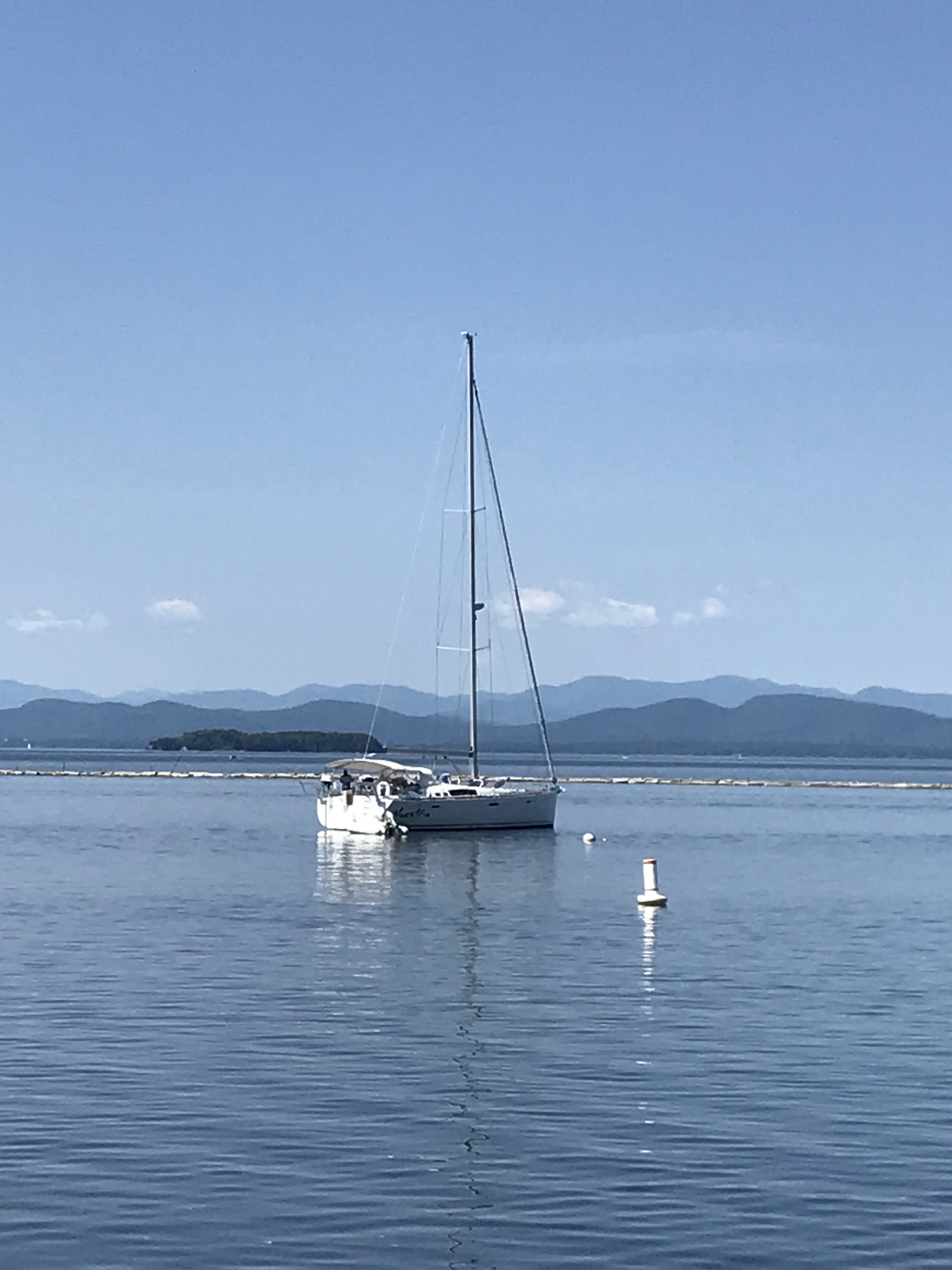
Burlington Harbor


Just a head's up: I'll be going off the grid for the next two weeks to enjoy some bucket-list worthy travel with two of my favorite people on the planet--my daughters. We're off to Lake Como in northern Italy, and from there, up into the Swiss Alps to a little village called Wengen. I've been working out and walking a lot for the past few weeks to get in shape for some hiking. I picked up a few necessary items: a good backpack, hiking shoes, and a jacket (it snowed there last week!). My bags are packed. Our itinerary is tentatively in place. There's just one problem: what will I read on the way??

"Reading can take you places 
you've never been before."
~Dr. Seuss~

Case in point...

In addition to laying in supplies and challenging my legs in preparation for our trip, I picked out a couple of books that sounded interesting. Nothing too thick or heavy. I have a hard time focusing on reading in an airplane unless I'm seriously engaged in the topic, so I came up with a few books that were referenced in something else I was reading or books I found in the bibliography or on-line. The problem is now I can't decide which ones will come with me. 

I have "Wherever You Go, There You Are" by Jon Kabat-Zinn. It sounded apropos, but I actually ordered it a while back in preparation for a meditation retreat with him next year, some twenty years after my first retreat with him.


But...I'll probably finish it before we leave.

Which leaves me with three other choices:

It also sounded apropos considering what is happening in our world...but that's not what it's about. 

"When We Cease to Understand the World shows us great minds striking out into dangerous, uncharted terrain. Fritz Haber, Alexander Grothendieck, Werner Heisenberg, Erwin Schrödinger: these are among the luminaries into whose troubled minds we are thrust as they grapple with the most profound questions of existence. They have strokes of unparalleled genius, they alienate friends and lovers, they descend into isolated states of madness. Some of their discoveries revolutionize our world for the better; others pave the way to chaos and unimaginable suffering. The lines are never clear.
With breakneck pace and wondrous detail, Benjamín Labatut uses the imaginative resources of fiction to break open the stories of scientists and mathematicians who expanded our notions of the possible."

...like quantum theory, singularity, and nuclear fission. Enough to drive anyone mad.

    2.


The author of this book is an experimental psychologist and clinical hypnotherapist who starts off with the three concepts that drove my interest in alternative healing methods early on, in the 1970s, when all of it was (and for many of the orthodox medical elite, still is) considered snake oil...hogwash...naive stupidity. These include clinical hypnosis, neurolinguistic programming, and neuroplasticity, among others. 

This one is definitely going with me!

    3.


In this book, the author revisits the wisdom that suggests our emotions are inseparable from our physiology and health. He explores the idea that repressed emotions create stress that can lead to disease, in particular auto-immune diseases...which is big issue in my family of origin. So, of course, I'm interested. He argues that taking time to listen to our patients' stories is a lost art.

This one will be going with me, too. 

So, I guess that's settled.

Not a mystery or romance among them. No fantasy or horror. Nothing to do with politics. Nevertheless...if that's what you prefer to read, we can still be friends, right? Right??

"The more you read, the more things you know.
The more that you learn,
the more places you'll go."
~Dr. Seuss, again~

Bis Widerhuege! Which is Swiss German for goodbye...see you again!
jan


Tuesday, September 10, 2024

how to feel better about things


Tanzania 2012

Last week we were reminded once again...as if we needed a reminder...that the world we live in is a conglomeration of both beauty and ruin, of cruelty and kindness, of contentment and despair. Of joy and grief. Of pain. Of mystery. It's a lot to think about.

We saw school children embracing one another in tears at the senseless gun violence that took down two of them and two of their teachers in Georgia. We watched children wander aimlessly through the rubble of what used to be home for them in Gaza. We were subjected to more political nonsense that included insults, lies, and denial from people we should be able to trust to defend the freedom, justice, and equality our nation was built upon.

"Suffering by nature or by chance
never seems so painful as
suffering inflicted on us by the arbitrary will of another."
~Arthur Schopenhauer~

Suffering is not only painful to witness, but it can leave us feeling helpless. Frustrated. Heartbroken. Thank goodness for goodness. For kindness, gratitude, and forgiveness. For people who step up to feed the hungry. For people who do what they can to provide relief. Comfort. Solace. Thank goodness for people who speak the truth and act on it...

"Although the world is full of suffering, 
it is also full of the overcoming of it."
~Helen Keller~

...because suffering has a tendency to overwhelm us. We need to remind ourselves that goodness abounds. It can help to seek out and appreciate beauty. To embrace friendship. To contemplate the mysteries that surround us. As Neil DeGrasse Tyson tells us, 

"Everyone should have their mind blown
once a day."
~Neil DeGrasse Tyson~

If you feel overwhelmed, or angry, or broken by the suffering you are experiencing yourself, or witnessing around you, or learning about from afar, contemplate the problem and explore the ways you might be able to help. Volunteer. Donate. Speak up. Set an intention or send up a prayer if that seems to work for you. 

If you feel thwarted or helpless, give yourself permission to think about something else for a little while. Let yourself rest. If all else fails, make an effort to put things into perspective. Contemplate the stars in the night sky. Read something by Neil DeGrasse Tyson:

"The universe is under no obligation
to make sense to you."
~Neil DeGrasse Tyson~

Listen to something by Bach or the Beach Boys. Step outdoors even if it's raining. Find a tree to hug. A dog to pet. A baby to hold. You'll feel better. 
jan


Sunday, September 1, 2024

don't quit your daydream


This week I started reading “Writing from the Heart” by Nancy Slonim Aronie for the third time.


This book is intended to encourage and inspire reluctant or disheartened writers to trust themselves, to take the risk of living from the heart, and to embrace the art of writing from the heart. I think all of us, writers or not, can learn from this book.

I know the author's words ring true to my experience. My inner critic is always beating up on my inner child, discouraging the poor kid from trying new things, nit-picking every unintentional goof-up, bullying her until she’s ready to give up completely. First, it was the dream of going to med school:

“The competition to get in is fierce.”
“Maybe nursing would be a better choice.”
“They don’t take many women, you know.”

Even now, later in life, I have to turn a deaf ear to all those other voices, the self-appointed experts who claim to have my best interests at heart as they rattle off disparagement:

“Start writing at your age? Really??”
“But you’ve never written a thing in your life.”
“Why would anyone give up a career in medicine? Why now??”

It’s no wonder we get discouraged as children when our creativity, curiosity, and energy levels are at their highest. The problem is that these same voices stalk us into adulthood. They can stop us in our tracks.

Which is why we all need encouragement, not just to write, but to live from the heart. As I read this book again, it occurs to me that we can all benefit from Aronie’s words, especially when we start to think about beginning something a new, when we still cling to a dream we once abandoned because we were told it was unrealistic, or unproductive, or unattainable.

Maybe you’re thinking about going back to school, or taking up piano. Maybe you’d like to try sky diving or scuba diving. Perhaps you’re drawn to carpentry or improv theater, but something inside you is holding you back.

“It’ll take too long.”
“It costs too much money.”
“I’d just be wasting my time.”

It may be time to raise your voice. Stand up to that inner critic. Stick up for the child who was bullied out of following his/her heart. Make sure the same thing isn’t happening to you now.

Whatever you do...

"Don't quit your daydream."
~attribution unknown~

Have a great week!
jan

Sunday, August 25, 2024

narrative vs visceral memory


A few years ago, I was working on a project through a site called "Storyworth." Every week they sent a writing prompt and I submitted a short piece in response, usually a brief memoir or autobiographical ditty. At the end of the year, I had 52 stories that they assembled into a book I gave to my children and grandchildren for Christmas. It included topics like "What was your favorite candy when you were a child," and "Did you have any pets when you were a child?" Nothing too deep.

One week, I tackled this one: "What Is One of Your Earliest Childhood Memories?"

I'd been avoiding the topic because my earliest memories date back to my hospitalization with rheumatic fever when I was three years old, not a happy tale to tell. I've written about it before. In fact, I published a brief memoir about the ordeal a couple of years ago. I have analyzed the experience in detail from every perspective over the years. I thought I was at peace with it.

I jotted down a few lines and then I went on-line to search for a couple of pictures. I found an image of The Children's Hospital of Buffalo, where I spent two weeks when I got sick. 


Then I found this:

www.ECMC.edu

This is a photograph from the Acute Scarlet Fever Ward at the hospital, and it made me catch my breath. It is exactly as I remember the ward I was in. Except that it was taken many years before my admission there, that little girl could be me. That was where my bed was in the ward. In the bed next to me was a boy about five years old. Back then the nurses wore stiff white uniforms, and they were proud to wear the official nursing caps they worked so hard to earn. I remember it all, but I did not expect the gut-punch I took when I saw this picture. It brought me to tears, it was so uncannily real to me. 

It made me wonder where that emotion has been hiding all these years, and why I felt it so viscerally when I saw this image.

It turns out we store memories in different ways. Narrative memory is the story we tell about what happened to us. Visceral memory expresses the sensory and emotional experience of the story without using words. It's what we feel, physically and emotionally, when the memory emerges. Fear. Sorrow. Anger. A racing heart. Sweaty palms. Nausea. 

"Trauma comes back as a reaction,
not as a memory."
~Bessel van der Kolk~

It's important for health care providers to understand the difference. I can describe the ward where I was hospitalized in great detail. I can tell you about the other children who were there with me. I remember the toys and books I kept at my bedside. I can tell you the whole story calmly and accurately, as though it were no big deal. In fact, I can narrate my entire medical history without blinking an eye. But there's more to it than that. Apparently, something else is still stored away inside, unwilling to be acknowledged and released. Something that still needs to heal.

When a patient presents with anxiety or depression that doesn't seem to fit the picture, or his symptoms don't respond to treatment, think about unresolved childhood trauma. When he senses a racing heart but his EKG is normal, or his headaches won't go away, go back in time with him. What triggers it? A certain song? The scent of his mother's cologne? The sight of a needle? Or like me, a random photograph I came across on-line? 

Narrative memory may be clear and accurate while visceral memory lurks in the shadows. Without warning, an innocent trigger can release a lifetime of unexpected emotion that can wreak havoc on the body. If you're a healthcare provider and things don't add up, go back. Try again.

"I may look peaceful,
but don't provoke the beast."
~Gautham Balaji~
jan


Sunday, August 18, 2024

narrative medicine~not just for doctors


The program in narrative medicine that was conceived, developed, and implemented at Columbia University under the leadership of Rita Charon, M.D., PhD. teaches medical students and residents to reflect upon and to write about illness as it affects their patients.


This goes beyond traditional training which is satisfied with arriving at an accurate diagnosis and effective treatment plan. It involves much more than clicking the bullets on an EMR. Exploring the patient's narrative provides insight into the ways illness/injury changes every aspect and every relationship in their patients' lives. Their sense of self. Their ability/inability to fulfill their perceived role in the family and in society as a whole. Their fears and sorrows. Where they find strength. What gives them hope. This process enables doctors to see their patients as more than interesting or challenging cases. It empowers them to tend to the whole person--body, mind, and spirit.
 
"Stories are not material to be analyzed;
they are relationships to be entered."
~A.W. Frank~
 
This practice improves the physician's sense of engagement with his patients. It deepens empathy. It has been shown to improve physician satisfaction and to lessen the likelihood of burn-out.
 
"Writing improves clinicians' stores of
empathy, reflection, and courage."
~Rita Charon, MD, PhD~
 
But narrative medicine isn't just for doctors.
 
Everyone who works in a health care system carries untold stories with them. Nurses and aides, EMTs and first responders, and therapists in every field have important stories to tell. Even staffers such as receptionists, orderlies, and even maintenance and food service workers all have stories they could share with us.
 
"While medicine creates material
for writing, perhaps even more important
is that it also creates
a psychological and emotional
need to write."
~Daniel Mason~
 
But narrative medicine isn't just for them, either.
 
The book on narrative medicine begins with the patient's story...a story almost everyone can tell. If you have ever visited a doctor's office or an emergency room, or been admitted to the hospital, or been a caretaker for a friend or family member, reflecting on the experience can help you organize your thoughts about it. It encourages you to sort out and name your feelings about it. It clears away confusion, and that eases fear. When you tell your story and someone hears it, you both learn from it. When you write your story and someone reads it, you leave part of your burden on the page.
 
Storytelling applied to the practice of medicine is more than helpful. It is a healing process.
 
"Writing is medicine.
It is an appropriate antidote to injury.
It is an appropriate companion
for any difficult change."
~Julia Cameron~
 
jan


Monday, August 12, 2024

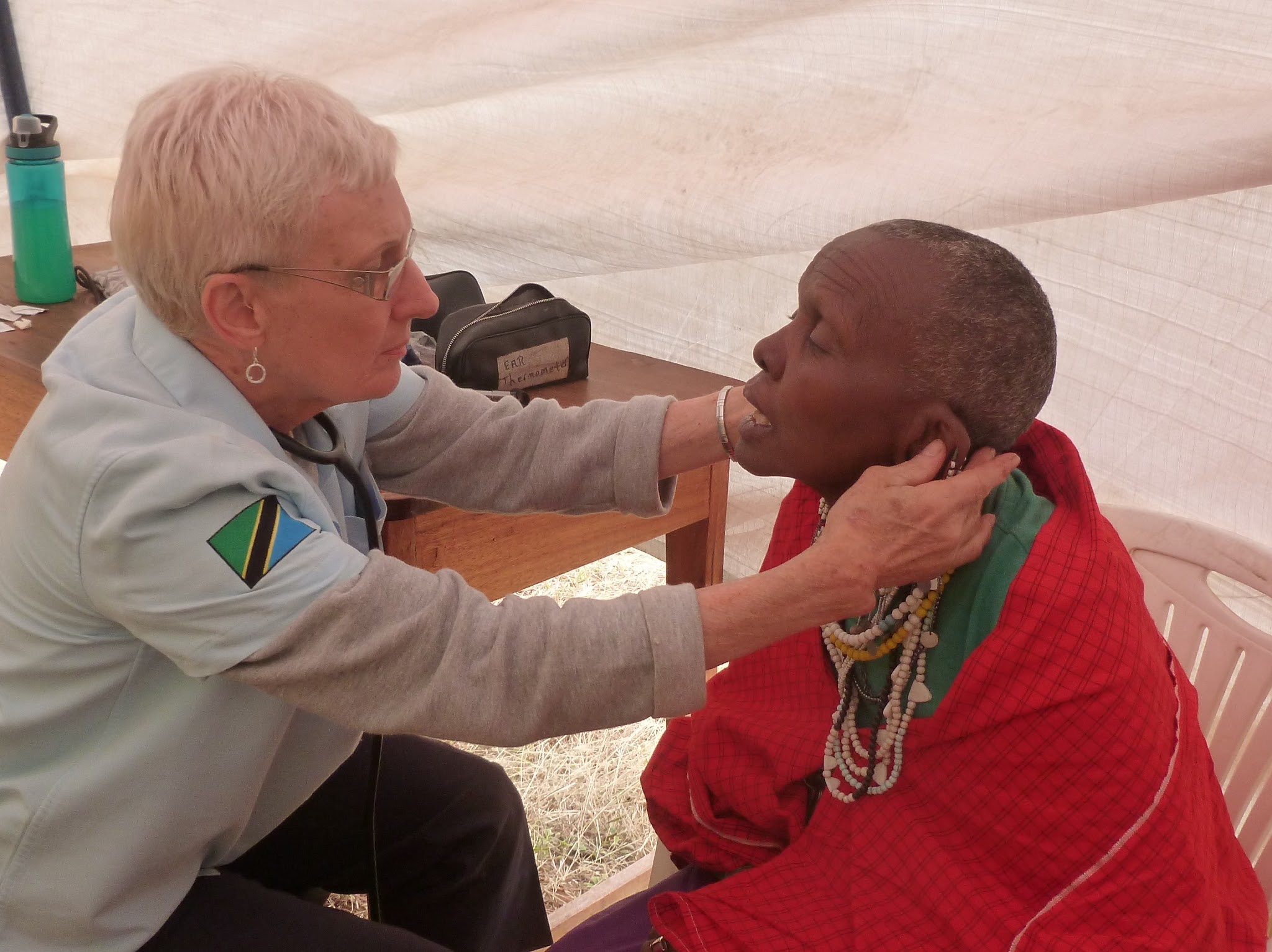
a doctor's touch


Tanzania 2012


This week, I planned to provide a few prompts for physicians and healthcare providers who are blocked for whatever reason from telling their stories, perhaps because of constraints on time and energy, self-doubt, or lack of inspiration and support. I had planned to offer words of encouragement by Julia Cameron (http://www.theartistsway.com ).

"Writing is medicine.
It is an appropriate antidote to injury.
It is an appropriate companion
for any difficult change."
~Julia Cameron~
 
…and by mindfulness meditation leader Jon Kabat Zinn:
 
"Cultivate wisdom and equanimity
~not passive resignation~
in the face of the full catastrophe
of the human condition."
~Jon Kabat Zinn~
  
Then a friend of mine (she knows me too well...) sent me a link to a YouTube video by Abraham Verghese, titled "A Doctor's Touch.”
 
 
"The most important innovation
in medicine to come along in the next ten years:
the power of the human hand."
~Abraham Verghese~

 
Suddenly a whole new set of questions arose. This video emphasizes the therapeutic effect of the laying on of hands by the physician...the healing roles of ritual and expectation...the importance of time spent with patients. It undermines the glorification of the ten-minute office visit…the game of "Beat the Clock" that doctors are required to play in order to meet productivity quotients. Don't get me started...
 
"The life sciences contain spiritual values
which can never be explained
by the materialistic attitude
of present day science."
~Sherwin B. Nuland~
 
These trends in the practice of "modern" medicine, among others, are what led me to bow out of practice because of fear of the inevitable: that the day would arrive when I would miss something important because there simply wasn't time to do the job well.
 
These are the questions I still can’t answer:
 
--Should I have taken a stand against the system and what I perceived to be the erosion of my wisdom and authority as a physician in the care of my patients?
 
--How could I have done it...without risking my job?
 
--Would it have made any difference?
 
--Is it too late now?
 
Thankfully, there are physicians like Abraham Verghese who are able to speak eloquently on our behalf while the rest of us scramble to collect our thoughts and yet fail to act on what we know to be true.
 
 "What moves men of genius,
or rather, what inspires their work
is not new ideas,
but their obsession with the idea
that what has already been said is still not enough."
~Eugene Delacroix~ 
 
 
Is there an issue you need to confront? What is holding you back? What kind of a difference can you make? When will you begin?
jan