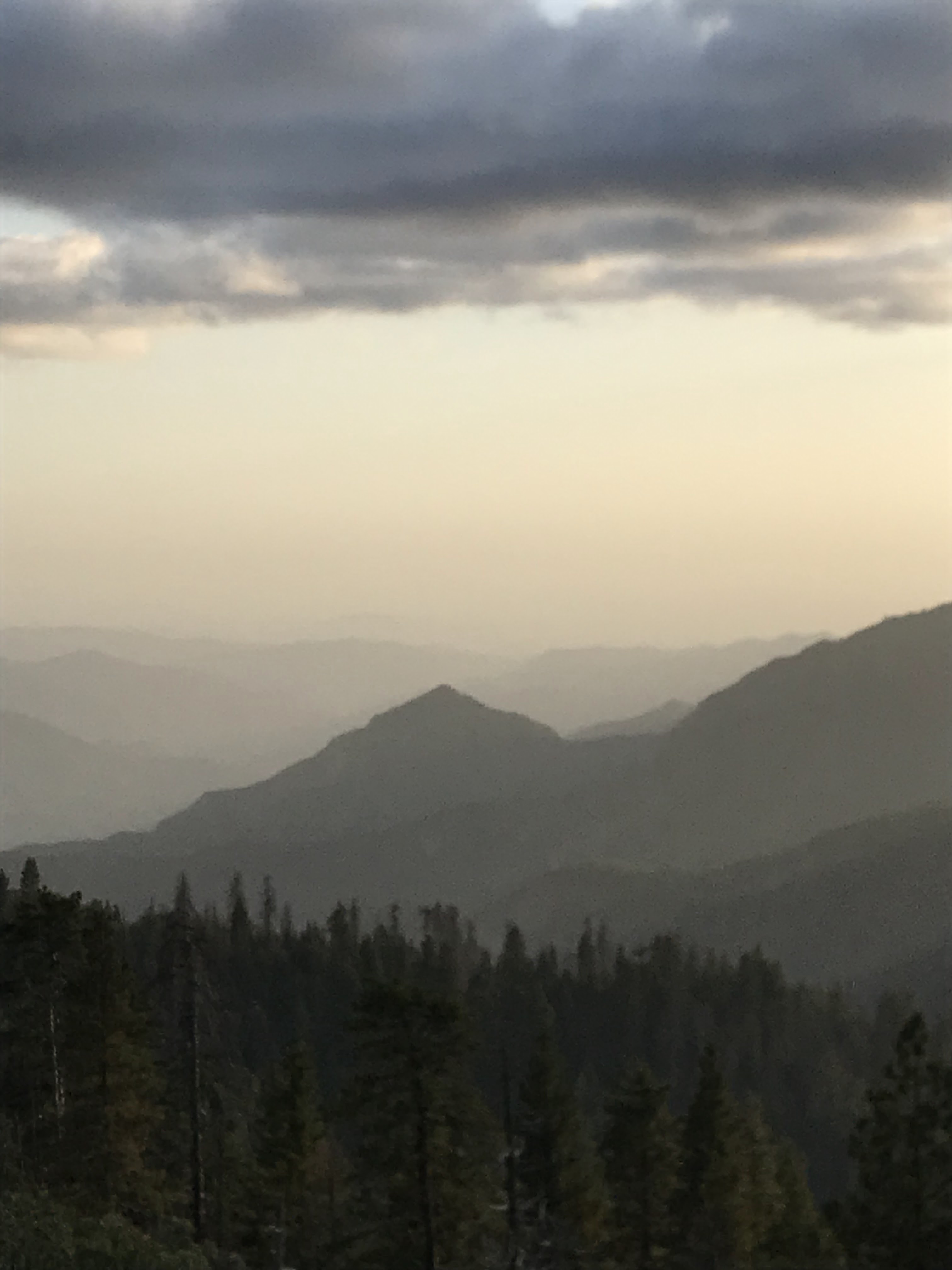
Sunday, July 14, 2024

feel the pulse beating in your own wrist


I started medical school in 1970. There, I studied traditional Western medicine for seven years, and I went on to practice according to its principles for thirty years. I knew the structure and function of every organ system and the signs and symptoms of the diseases that affect them. I learned how to examine patients, which diagnostic tests to order, and how to treat the patient's problem. For the most part.

It turns out, that was the easy part. Most of it made sense. How oxygen gets into the bloodstream. How the kidneys know what to excrete and what to recycle. How food is broken down and absorbed, and what we are left to deal with in the aftermath. In the healthy state, every process is carried out with precision, perfect timing, and uncanny coordination. And, for the most part, it all happens without any effort, attention, or awareness on our part. The fact that the body body knows what to do to keep us healthy is incomprehensible. The fact that it knows how to heal itself is beyond imagination.

"There is more wisdom in your body
than in your deepest philosophy."
~Friedrich Nietzsche~

1970 was also just about the time the mind-body-spirit connection was catching on among forward thinking healers and energy workers. Timothy Leary and Ram Dass were experimenting with hallucinogenic mushrooms in their quest for enlightenment. Quantum physicists were eyeing the nature of consciousness. We started to hear about the therapeutic applications of acupuncture, hypnosis, meditation, massage and therapeutic touch, Reiki, and yoga...all dismissed by the medical elite as malarky for lack of randomized, double-blind, placebo-controlled trials that proved their worth. All of it dismissed by "real" doctors as so much hocus-pocus. Snake oil. Those of us who were curious about it were belittled for our naivete, and shamed for our gullibility.

Nevertheless, these so-called "alternative" therapies intrigued me. The scientific community rejected the concept of the mind-body-spirit connection, but I knew better. I'd seen it work.

When I was a medical student, I shadowed an orthopedic resident who had earned a reputation as something of a maverick when he underwent an inguinal hernia repair under self-hypnosis. No anesthesia, thank you very much. When I worked with him in the Emergency Room, he reduced a patient's dislocated elbow after nothing more than a brief hypnotic induction, sparing her a dose of general anesthesia with its lingering after effects, and a night in the hospital. I was sold. I studied self-hypnosis, and submitted to surgery under its spell myself. I squandered my vacations on meditation and yoga retreats. I connected with energy healers. I learned to chant, to visualize auras, to breathe. I understood energy. It all made sense to me.

"Your body hears everything
your mind says."
~Naomi Judd~

The quest to connect with my own mind, body, and spirit led me to a mysterious, theoretical, and fantastical world of untold potential. Of waves and particles, of infinitesimal smidgeons of time, and never-ending stretches of space. I learned that our genes express themselves differently depending on our environment and experience. That we have the ability to modify the traits we pass on to future generations. That ultimately, the mind is in charge of what transpires within and even around us. All because of the incomprehensible complexity, interconnectedness, and precision of all that sustains life.

In the meantime, I continued to see patients in my office every fifteen minutes. I whittled their medical histories and examinations down to a few bullet points in a new-fangled electronic medical record system, and sent most of them off with a prescription or two, in keeping with my training.

To be fair, not everyone believes that cell biology is connected with our thoughts, emotions, and experiences. Not every biologist supports the idea that the brain affects the biochemistry of cells down to their molecular structure and function. But then, not that long ago, many scientists dismissed the idea that blood pressure, heart rate, and even body temperature could be modulated by meditation. They had to transport groups of Tibetan monks to research laboratories in the US, and hook them up to monitors to record the very phenomena they so vigorously questioned. They were mind-boggled by what they observed. The monks were able to lower their heart rates and blood pressure, and to raise their body temperature even in sub-freezing conditions. Just by thinking about it...

"When nothing is certain,
anything is possible."
~Mandy Hale~

...which is jaw-dropping because it touches on the greatest mystery of all: the origin, nature, and function of consciousness, including thought, memory, and imagination. Science has fully explored the anatomy, molecular structure, electrophysiology, and biochemistry of the brain, but we haven't quite figured out how it works. We don't know how thought is generated in the first place, or how it is translated into something as easily experienced and observed as tears, or laughter, or fear. We don't exactly understand how a thought can raise the heart rate, or make us sweat, or leave us shaking. How a remote memory resurfaces, and where it has been hiding.

I practiced medicine for over three decades without giving either the body or the mind credit for its genius. It's a shame to have spent so many years memorizing, studying, and analyzing information that has since been proven to be inaccurate, or incomplete, or totally untrue. It unnerves me to realize how much time and effort I devoted to learning what has already become obsolete, or been proven wrong, or been questioned anew. It is amazing to contemplate the myths we embraced, the mystery that continues to unfold, and the masterpiece it reveals.

"Your body's ability to heal
is greater than anyone has permitted
you to believe."
~attribution unknown~

You may not understand the science of cell division and differentiation, or what drives it. It may be hard to grasp how it affects your health and well-being, and it might seem absurd that you have any control over it at all. It's interesting to contemplate one's own thoughts, and to speculate on their origin, nature, and power. 

Physicists, biologists, physicians, philosophers, and quantum theorists are hard at work trying to figure out exactly what it is that makes us who we are...while our bodies are mysteriously, silently, and predictably doing what they do best: making us who we are.

If this doesn't astound you, try this: study the sky at night. Watch for the first signs of spring. Feel the pulse beating in your own wrist.

"Imagination is more important
than knowledge."
~Albert Einstein~
jan


Monday, July 8, 2024

the key to the universe


It happened again this week. I finished another almost-300 page book, much of which I didn't understand. It was about the origin and evolution of the cosmos. Quarks and neutrinos. String theory. Dark energy and dark matter. And how we know what we know about it.

"The more you know,
the more you know you don't know."
~Aristotle~

My friends tend to respond with a blank stare or an eye roll when they ask what I'm reading this time...because, usually, I can't explain it. This is true of much of what I choose to read about. The interface between science and spirituality. Eastern psychology and practice. Quantum theory. Consciousness studies. 

Perhaps this month's record setting heat wave propelled my attention to the ravages of climate change and the fate of our planet. To our place in the solar system. To our dependence on unpredictable and as yet unknown cosmic forces, because the book I just finished is "Cosmic Queries" by Neil deGrasse Tyson, an astrophysicist at the Hayden Planetarium in NYC. He not only describes the origins and evolution of the universe as we know it, but he tackles the big questions. How old is the universe? What is it made of? How did life begin...and how might it end? Who figured it all out and how did they do it?

"The universe is under no obligation
to make sense to you."
~Neil deGrasse Tyson~

It fills me with deep reverence for anyone who understands mathematics like this, not to mention the person who came up with it:

~from Mostafa Elhashash @ Praxilabs.com ~

So, why do I bother reading books that are so difficult to understand when I could be reading romance novels, cozy mysteries, thrillers, or dystopian fantasies? When I could be meeting with friends over a glass of good red wine or simply watching home renovations on TV? (Not that there's anything wrong with any of that...)

For me, the answer is AWARENESS

I may not exactly understand what I'm reading about, but it helps to be aware of it. To know that it exists. That someone, somewhere understands it.

"Imagination is more important
than knowledge."
~Albert Einstein~

Before I tackled this book, I'd never heard of Lagrange Points, the Heisenberg Uncertainty Principle, or the WOW signal. I didn't know what a "singularity" referred to, or what a Higgs boson was. I didn't know that Yellowstone National Park is situated on a supervolcano that last erupted 664,000 years ago. It's so massive that, if it erupted today, it would bury much of North America under volcanic ash. I'd never heard of Mount Krakotoa in New Zealand. When it erupted in 1883, seawater rushed in to fill the gap, causing an explosion heard in Australia, 2,000 miles away~the loudest sound in recorded history. Imagine that! I still don't really understand the BIG BANG...but I have a clearer awareness of it now.

Does knowing this make life any better? Easier, or happier, or safer? No. Does it make any difference whether you're aware of any of this or not? 

As a matter of fact, it does. It leaves me in awe. It fills me with wonder. It reminds me that there is so much I don't know I don't know...which inspires me to read, to reflect, and to wonder. It humbles me. It compels me to ask if we are witnessing an unfolding mystery or a genuine miracle.

"I do not believe in miracles.
I rely on them."
~Yogi Bhajan~

My advice is this:

Don't wait (like I did) until you retire to pursue whatever stokes your curiosity. To explore whatever fuels your sense of disbelief or skepticism. To embrace the thing that makes you wonder.

Never stop imagining. Never stop questioning. Never abandon the search.

"The most interesting questions
are the ones we don't yet know to ask."
~Neil deGrasse Tyson~
jan


Sunday, June 30, 2024

how story sharing affects the brain


Much of what is written about the healing power of storytelling has to do with more or less intangible, warm fuzzy concepts like finding your truth, defining your purpose, or sharing your message. It has to do with attention, affirmation, and empowerment. However that happens.

From a more scientific standpoint, we know that storytelling causes the release of hormones such as oxytocin that governs empathy and social interaction, and cortisol that is connected to the stress response. We can measure the levels of these hormones so we have proof. That's what happens.

But the biological correlates of storytelling are far more complicated than that. Take this, for example:

"The coupling between speaker–listener and listener–listener brain pairings was assessed through the use of a spatially local general linear model in which temporally shifted voxel time series in one brain are linearly summed to predict the time series of the spatially corresponding voxel in another brain. Thus for the speaker–listener coupling we have this equation:

equation image
where the weights An external file that holds a picture, illustration, etc.
Object name is pnas.1008662107i1.jpg are determined by minimizing the RMS error and are given by An external file that holds a picture, illustration, etc.
Object name is pnas.1008662107i2.jpg Here, C is the covariance matrix An external file that holds a picture, illustration, etc.
Object name is pnas.1008662107i3.jpg and An external file that holds a picture, illustration, etc.
Object name is pnas.1008662107i4.jpg is the vector of shifted voxel times series, An external file that holds a picture, illustration, etc.
Object name is pnas.1008662107i5.jpgWe choose An external file that holds a picture, illustration, etc.
Object name is pnas.1008662107i6.jpg, which is large enough to capture important temporal processes while also minimizing the overall number of model parameters to maintain statistical power. We obtain similar results with An external file that holds a picture, illustration, etc.
Object name is pnas.1008662107i7.jpg."  


Got that? Probably not. You probably don't understand a word of it. I know I don't.

"Maybe stories are just
data with a soul."
~Brene Brown~
 
In plain English, though, this means that stories have the power to heal through the process of:
  • Alignment: an unconscious process that enables communication between storyteller and listener so that their brains exhibit mutual temporal, coupled response patterns that synchronize over time. In other words, they are both connected by and engaged in the story.
  • Coupling: the emergence of complex behaviors that require coordination of activity between individuals. In health care this is important because this factors into whether the patient will follow directions and change unhealthy behaviors. If the health care provider doesn't attend to the patient's whole story, or the patient doesn't feel he has been heard, neurolinguistic coupling can't take place. Nor can healing.
  • Dialogue: the exchange of ideas and information that leads to understanding, empathy, and interaction. 

~Pamela Rutledge~


The interesting thing is that this can all be visualized by scanning the brains of storytellers and listeners with a functional MRI as they interact. You can watch the gradual alignment and coupling of electrical activity in specific areas of their brains as the dialogue progresses. You can, then, measure the change in levels of neurotransmitters and hormones, and you can observe the behavioral changes that follow.

This kind of information is important if you reject the validity of anecdotal evidence, and instead, cling to hard data to make your point: that storytelling directly affects brain function and, in doing so, it affects the physiology of the body. It explains how storytelling heals.

"The truth is, in order to heal
we need to tell our stories
and have them witnessed."
~Sue Monk Kidd~

If your job is to assess the cost effectiveness and clinical correlates of thorough history taking in the clinical setting, this information helps make the case for improving physician-patient interaction by embracing the importance of narrative in clinical practice.

There is no doubt that:
.
"A story is a powerful, unifying tool
that connects mankind, breaks down barriers,
and heals wounds."
jan


Monday, June 24, 2024

"tell me your story, show me your wounds"


I called my best friend last night. We don’t get to see one another very often anymore, but we talk every week. After we catch up on all the things that keep us busy, the conversation usually turns to friends and family. Here are a couple of the stories we shared this week:
  •      My friend described the plight of a woman who has undergone eight operations in a futile effort to eliminate a recurring MRSA infection post-total knee replacement.
  •      She expressed her concern for a neighbor in her seventies who took a tumble and broke her hip, and then, a few weeks later, fell again and suffered a subdural.
  •      We discussed the plight of a woman from her church who is losing her battle against metastatic breast cancer.
  •       I told her that a friend's daughter, recently married, had suffered a miscarriage over the weekend.
…not one happy moment among them.
The thing is these occurrences are not uncommon. We encounter them every day. In fact, stories like these are so commonplace we are tempted to dismiss their gravity and to overlook the emotional devastation that remains in their aftermath.

“Under the look of fatigue,
there is always another story.
There is more than meets the eye.”
~W H Auden~

But what if we knew those details? Are we interested, empathetic, compassionate, or simply curious enough to ask? Is there more to the story?
  •      The woman with the recurring MRSA will be going off IV antibiotics in a week or two. Every time she does, the infection recurs…seven times, so far. If it happens this time, she will be staring down the barrel at an amputation…
  •      Several months earlier, the neighbor who fell and her elderly husband became foster parents to their grandson who was 9 months old at the time…
  •      The woman with the metastatic breast cancer had entered hospice care. The question that arose for my friend was whether or not it was too late to give her a call. What could she possibly say?
  •      The young woman, who suffered the miscarriage at home, described herself as a “monster” for having unknowingly flushed her baby down the toilet.
There is always more to a story than first meets the eye. It pays to go deeper. To draw out the most painful details. How else will we know what a person needs? As healthcare providers and caretakers, how will we know what to do to help? What to say? How can we help them heal?
“Everyone you meet is fighting a battle
you know nothing about.
Be kind.
Always.
~various attributions~
Last night I spent an hour on the phone with another a friend whose autobiography should be titled, “Anything That Can Go Wrong, Will…” Her story is one of multiple oversights, erroneous assumptions, and mistreatment during a recent hospitalization that would give Stephen King nightmares, I kid you not. Untreated hypertension and untreated pain complicated by complacent nursing care. Today, she thanked me just for listening.
 
It turns out that narrative in medicine is alive and well in every community, in every neighborhood, and around every kitchen table.

What is your story?

“Tell me your story,
show me your wounds,
and I’ll show you what Love sees
when Love looks at you.
Hand me the pieces,
broken and bruised,
and I’ll show you what Love sees
when Love sees you.”
~from “When Love Sees You”~
~lyrics by Mac Powell~

jan


Friday, June 14, 2024

women's reproductive rights in healthcare


Women's health care focuses on their reproductive years. This is an important concern of every health care provider, so of course, I'm going to write about it. Assuring accessibility. Navigating patients' concerns, preferences, and options. Defending their choices.

I'm not one to publicly address political, ethical, or moral aspects of health care issues when I'm not directly or personally affected by them, but reproductive rights come under the umbrella of health and well being, not political manipulation, power, or control, so I have spoken up.

This is a copy of the letter I sent to every Republican senator in 2022. Roe v. Wade was at stake back then. Now that abortion rights have been overturned, though, we're still in danger of losing access to mifepristone and misoprostol, and to IVF. I will never have to make a personal decision for or against abortion or IVF, nor will my daughters, at this point...but my granddaughter may come up against the issue. And so might yours...

*

Dear_______:

I am writing to you regarding my concerns should the Senate move to undermine the reproductive rights of women by overturning the 1973 United States Supreme Court decision on Roe v. Wade.

I am a physician with over thirty years of experience in Family Medicine so I am familiar with the issues that impact the accessibility, efficacy, and safety of women’s health care. I am also the mother of three adult children, and the grandmother of three youngsters, so I know a lot about the sanctity of a woman’s body and her reproductive rights.

As a physician, it is my duty and privilege to assist my patients with the difficult decisions they have to navigate when it comes to health care. Whether or not it is safe to vaccinate their children. Whether or not to sign the Do Not Resuscitate order. Whether to carry an unintended pregnancy to term, especially in the case of rape/incest, or contraceptive failure. I don’t make these decisions for my patients. I educate them. I guide them through a labyrinth of questions and concerns, some of which they might not otherwise have considered. Things they might regret later on. Together we look at the pros and cons, the advantages and disadvantages, and the risk of unfavorable outcomes when we explore their treatment options. I don’t coerce them, or manipulate them, or mislead them to satisfy my personal, political, or religious agenda. I listen to the stories they share with me, and I respect the decisions they make for themselves.

It's not that I don't hold strong beliefs about a woman's reproductive freedom. I do. I am not declaring my support for, or my opposition to abortion. It is not my role, my duty, or my intention to impose my personal beliefs on anyone. Nor should you.

At the heart of Roe v. Wade is a woman’s right to decide for herself about elective abortion. Most of us will never have to confront this decision, but our daughters may, and our granddaughters may. The next time you give you daughter a hug, the next time you sweep your granddaughter into your arms, imagine her as a victim of rape. If you vote to overturn Roe v. Wade, be absolutely certain you are willing to watch her suffer. To make her suffer. Ask yourself if you will embrace her child of rape with the unconditional love you feel for your own children.

Because this is my fear. I fear for the infants born to these women. That they will be neglected, rejected, and abused because the color of their skin, or the texture of their hair, or their facial features mark them as different. As undesirable. As unlovable. I worry that they will end up in our emergency departments, abandoned on our streets, or cast off into the trash. How will we care for the ones who survive? Who will care for them? You cannot claim to support the right to life of the unborn unless you have a plan in place to protect and care for them after birth.

I worry, too, that women will, once again, be forced into back alleys and basements in a desperate and dangerous effort to terminate these pregnancies. That we will see a resurgence of the septic abortions and mutilations that compelled us to support women’s safety and well-being by passing Roe v. Wade in the first place. I am afraid the next generation will manifest a whole new class of traumatized, angry, and abandoned women and children.

But that’s not the only problem I anticipate. The decision to revoke the protections and human rights of women will set a new legislative precedent. It will confer authority to outliers and men in power to unilaterally eliminate the protections we have put in place to support immigrants and asylum seekers. To prevent gun violence. To feed the hungry and shelter the homeless. To access affordable health care, and to protect our privacy.

If Roe v. Wade falls, it will bring our constitutional democracy to its knees, a democracy that has flourished not in spite of, but because of, its diversity, inclusivity, and vision for over 200 years. Indeed, we have already witnessed the violation of basic human rights, the corruption of justice, and a surge in violence and fear among our most vulnerable citizens in the name of political power, self-proclaimed entitlement, and hatred.

This is not the America you and I grew up in. It is not the same country that bestowed upon us a path to success, security, and freedom. How can we deny it to others?

As a United States Senator, you are in a position to change the course of history as it is being written. Will you allow yourself to surrender to men who are hungry for power and control over the reproductive freedoms of women they don’t even know? Why are you afraid to stand up to them? Has your heart hardened against the humanity you are part of? What scares you about defending the rights of women? What prevents you from acting out of dignity, purpose, and principle?

When did you fold?

For the sake of all women and children, out of compassion for all who suffer, and in the name of human rights, I implore you to reconsider your support of the Republican leadership on this important issue. Vote to uphold Roe v. Wade. Do what is honorable, compassionate, and just, or explain to us why you refuse.

Thank you for your attention and consideration.

Yours, 

Janet F. Cincotta, M.D

*

Did this letter change anyone's mind? Did it make any difference at all? It did to me. I'm pretty proud of it.

"Each time a woman stands up for herself,
she stands up for all women."
~Maya Angelou~
jan


Sunday, June 9, 2024

unspoken forces at work


Hippocrates is the one who advised physicians, "First, do no harm." Cicero proclaimed, "The safety of the people shall be the highest law"...lofty principles that, to this day, both challenge and inspire health care professionals.

It was Paraclesus, though, who declared, "The physician should speak of what is invisible...He becomes a physician only when he knows that which is unnamed, invisible, and immaterial, yet has its effects." He was speaking, of course, about the impact of the patient's thoughts, feelings, and emotions on his experience of injury and illness. On his ability to heal. These include his fears, expectations, and hopes...all invisible. All unspoken.

"O, what an untold world
there is in one human heart."
~Harriett Beecher Stowe~

In his book, "The Wise Heart," Jack Kornfield reminds us that the key to healing has to do with the patient's understanding of his illness. What is he fearful about? Why? What does he think will happen to him? How will he support his family? Who will take care of her children? It turns out making the diagnosis is sometimes the easy part. Uncovering the patient's hidden fears can be harder.

"You'd be surprised
what lengths people will go to
not to face what is real and painful 
inside them."
~Ian Kester~

For example, let's say a patient presents with breast cancer. She is forty-eight years old, two years older than her mother was when she was diagnosed. But her mother died following surgery and a full course of radiation and chemotherapy. This is what scares her. She jumps to the conclusion that this is her fate as well, despite the fact that her mother's cancer was far more advanced when it was detected. Despite the fact that treatment has improved in the twenty years since her mother's diagnosis. The patient's initial reaction to her diagnosis may be to give up right then and there...her unnamed, invisible, and immaterial thoughts, feelings, and emotions left unchecked. And unspoken.

"Your body hears everything
your mind says."
~Naomi Judd~

Or, let's say the patient is a middle-aged man who schedules a ten minute appointment with you so he can get something for his heartburn. But he isn't simply experiencing indigestion. He is actually having angina, and it's getting worse. He has convinced himself that it's just his stomach because the thought of a heart attack scares him. His brother had one last year, and ended up with a pacemaker and a defibrillator. His ten minute appointment includes an EKG and blood work, and it stretches into a forty-five minute dialogue about unstable angina and the need for hospitalization. He tries to laugh it off, but beneath his cavalier manner, he fears for his life. His family. His business. All of it invisible. All of it unspoken.

"A physician is obligated to consider
more than a diseased organ,
more than even the whole man.
He must view the man in his world."
~Harvey Cushing~

Clues to the unspoken forces at work in the patient's life include refusal of, or noncompliance with treatment. Denial, anger, impatience, or resistance. Reticence. Despair. 

The health care provider should handle these patients with care. Ask about their fears, expectations, and perceptions. Take time to speak about what you intuit to be unnamed, invisible, and unspoken. Do whatever you can to help him tell his whole story.

"Anything will give up its secrets
if you love it enough."
~George Washington Carver~
jan

Monday, June 3, 2024

a counter-cultural rant, with my apologies


I learned something new this week. I'm pretty sure it isn't true, but there it was. False marketing at its finest. I did not know that my whole body smells bad. I never noticed it. Now I'm told that I need a "whole body deodorant"...something new on the market. I'm sorry, but this strikes me as laughable.

~brought to you by Walmart~

I rank it right up there with "laundry sanitizer" when, all these years, I was satisfied that detergent and hot water did the job just fine. Even cold water. I wasn't really worried about pathogens when I folded my laundry or got dressed in the morning. I'm still not convinced I need to worry about them.

It's hard to know what to believe anymore. If the marketers can convince people they stink when, obviously, they don't...and that their clean, fresh laundry is crawling with dangerous microorganisms, what will they come up with next? 

Anything that will sell.

Don't fall for it. Even the Buddha knew better, back in the 5th century BCE:

"Believe nothing,
no matter where you read it or who has said it,
not even if I have said it,
unless it agrees with your own reason,
your own common sense."
~Buddha~

This is especially important today when people are desperate to break into the marketplace. But it affects us in other ways, as well. It raises questions about honesty, integrity, and ethics. About greed, arrogance, and fairness. It smacks of exaggeration, distortion, and fear. Falsification spills over into every aspect of our lives. Business and commerce. Politics and law. And now, personal hygiene and how we do our laundry.

This is just a cautionary note. A reminder not to jump on the bandwagon because of something you have read, or you wish were true, or because of something that scares you. No matter who says it or where you read it. No matter how many others believe it. No matter how loudly or insistently they proclaim it. Think for yourself...

"The important thing is not to stop questioning."
~Albert Einstein~

...and when you think you finally have the answer, go back and question yourself again.
jan