Tuesday, July 16, 2019

why you should join a writing group...or start one


Here are ten good reasons you might be interested in joining a narrative medicine writing group:

1.      You're a health care provider or a therapist in any field. You have been a patient at some point in your life, or you know someone who has been. Trust me: you have plenty to write about.
 
"Anybody who has survived his childhood
has enough information about life
to last him the rest of his days."
~Flannery O'Connor~
 
2.      People keep telling you, “You really should write a book…” because of all you have endured and overcome, or because of your special expertise, or exceptional courage, or unique perspective.

3.      You keep telling yourself, “But I’m not a writer,” even though there’s a story chiseling a hole in your heart…something that caused such sorrow, or anger, or despair you can’t bear to revisit it, or such relief, or gratitude, or inspiration you can’t imagine how you would put it into words.
"There is no greater agony
than bearing an untold story
inside of you."
~Maya Angelou~
4.      You keep telling yourself, “I wouldn’t know where to begin,” even though you’ve been over the details in your mind a thousand times.

5.      You keep telling yourself, “My life (or work or experience…) is so ordinary, I have nothing interesting to say, nothing new to add, nothing helpful to share.”
 
"Write what disturbs you, what you fear,
what you have not been willing
to speak about.
Be willing to be split open."
~Natalie Goldberg~
6.      You like to write, but convince yourself you’re not good enough at spelling, grammar, or punctuation to share what you have written.
 
"If you hear a voice within you saying:
you are not a painter,
then paint by all means, lad,
and that voice will be silenced."
~Van Gogh~
The same can be said for writing.

7.      You think you’re too busy. (You’re not.)

8.      You’re afraid you’ll offend someone if you write the truth…the surgeon who botched your operation, or your uncle who abused you as a child, or the colleague you don’t trust.
 
“All you have to do
is write one true sentence.
Write the truest sentence you know.”
~Ernest Hemingway~
 
9.      As a patient, you sometimes feel like giving up. If you’re a provider, you sometimes feel like quitting.

10.  You harbor questions you can’t answer…doubts that won’t go away…pain that nothing can heal.
 
"While medicine creates material for writing,
perhaps even more important is that
it also creates a psychological and emotional
need to write."
~Daniel Mason~
 
If you’re still not sure writing is for you, I’d like to recommend a couple of good books for beginning writers, especially those who are reluctant to get started:
"The Artist’s Way" by Julia Cameron
"If you Want to Write" by Brenda Ueland
"Writing from the Heart" by Nancy Aronie
If you’re interested but can’t find a narrative medicine group near you…think about starting one. I am.
jan


Tuesday, July 9, 2019

unlock the power of storytelling


~Burlington, VT~
💜
 
Last week, I enjoyed the privilege of attending the fourth annual conference on narrative medicine at Kripalu Center for Yoga and Health in Stockbridge, MA. This year the conference was reimagined and renamed "Narrative Healing~Unlock the Power of Storytelling." The program was more experiential this year, focusing on practices that generate stories, facilitate storytelling, and promote healing.
 
Buddhist teacher and author, Ethan Nichtern, taught us that storytelling is a meditative process, and that meditation is a creative and generative practice.


 Image result for ethan nichtern
 
Ethan Nichtern, a senior Buddhist teacher primarily trained in the Shambhala tradition, is the author of The Road Home: A Contemporary Exploration of the Buddhist Path, which made multiple lists of the best books of 2015, and has recently published The Dharma of The Princess Bride: What the
Coolest Fairy Tale of Our Time Can Teach Us About Buddhism and Relationships.


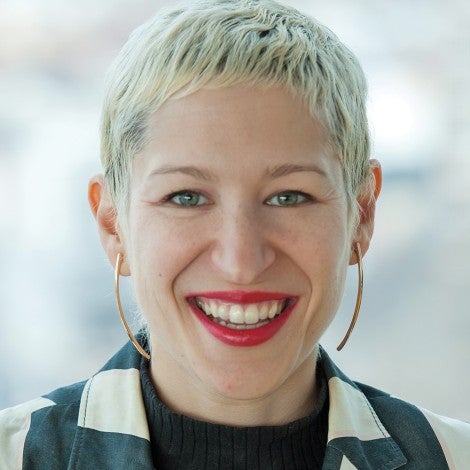
Activist and publisher, Jamia Wilson, spoke about owning our authentic story, and connecting with one another for universal good.

Image result for Jamia Wilson
 
Jamia Wilson is the executive director and publisher of the Feminist Press. She is the author of Young, Gifted, and Black and Step Into Your Power, coauthor of Road Map for Revolutionaries, and wrote the introduction and oral history to Together We Rise: Behind the Scenes at the Protest Heard Around the World. She is the recipient of the 2018 NYU Graduate School of Arts and Sciences Distinguished Alumnae Award, the Planned Parenthood Southeast "Legend in the Making" award, and her work has appeared in numerous publications, including the New York Times, Essence, Rookie, Refinery29, CNN, the Washington Post, Elle, and more.
 
 
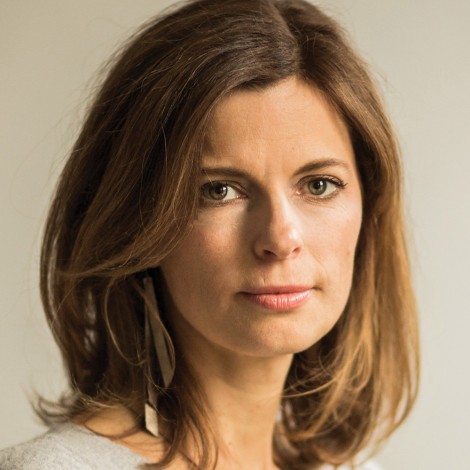
Communications coach, Leah Bonvissuto, taught us about listening to our authentic voice and the embodiment of language. She challenged us to think in terms of the story our bodies are trying to tell us, and how to communicate it to others.


Image result for leah bonvissuto
 
 
Leah Bonvissuto is a Communication Coach + Founder of PresentVoices, where she helps professionals communicate consciously and be powerfully present when speaking. She builds on her experience as an award-winning theater director to help leaders and teams at LinkedIn, Facebook, Bank of America, Indivisible, AIG, PayPal, among others, improve executive presence, defuse public speaking nerves, and advocate for themselves in the workplace. Leah is passionate about helping her clients speak with conviction and without apology. Leah coaches professionals one-on-one, designs custom workshops for teams at corporations and speaks about communication whenever possible. She pulls from the worlds of theater, mindfulness and movement to help people feel confident and in control of their communication.
 
 
Poet and teacher, Holly Wren Spaulding, introduced us to the healing and transformative power of poetry.
 

Image result for holly wren spaulding
 
Holly Wren Spaulding is the founder of PoetryForge, where she empowers writers to explore the fullness of their humanity through the practice of poetry. A passionate teaching artist, collaborator, and editor, she works across disciplines to expand the definition of what it means to be a poet in the world. In 2018, the National Endowment for the Arts supported her role in the conception of a residency entitled the Long Memory Project. Her writing has appeared in the New York Times, The Nation, Michigan Quarterly Review, Witness, Poetry Northwest, The Ecologist and in Elemental: A Collection of Michigan Creative Nonfiction, among other places. She is author of If August, Pilgrim, and The Grass Impossibly, and is a member of the creative writing faculty at Interlochen Center for the Arts, where she began her education more than 30 years ago.
g’s poems, articles
And, finally, Lisa Weinert, founder of the Narrative Healing program at Kripalu and dedicated yoga instructor, introduced us to a restorative yoga practice, and shared writing prompts that connected us with our authentic story, and with one another.


Lisa Weinert, RYT 200, is passionate about powerful voices and the potential for storytelling to heal and transform lives. She has worked with authors as a publicist, editor, and agent for 15 years, and is the curator of the Narrative Healing program at Kripalu. She is committed to empowering authors with the tools to create and launch their work. Lisa established an online course called the Age of the Storyteller with the Authors Guild, teaches a publishing course at Wesleyan University, and offers literary book coaching to select clients.
*
 
If there is something in your past that emerges again and again and brings you to sorrow, anger, remorse, or shame, it may hold the story you need to tell. If you keep tucking it away, out of sight and mind, this might be the time to summon it, embrace it, and then, send it out. Ask yourself, "Who will benefit from hearing my story?" Then, tell it.
 
"Start where you are.
Use what you have.
Do what you can."
~Arthur Ashe~
 
 
And, remember: The next Narrative Healing conference is less than a year away.


jan


Sunday, May 26, 2019

why me? why this? why now?


Serious illness can strike hard and fast. It could be a sudden heart attack or stroke. A deadly infection. Cancer. Suddenly, patients have a lot to process. They want to understand what is happening to them, and why. What treatment is available. What their prognosis is. It's a lot to think about. After the initial shock wears off a bit, other issues surface. What if I can't work? What if I can't take care of my family? What if I don't get better? It can be downright scary.
 
"It may take a doctor
to diagnose someone's disease,
but it takes a friend to recognize
someone's suffering."
~quoteideas.com~
 
At some point in the process, most patients want to know three things:
 
Why me? Why this? Why now?
  • Why me?
                     The answer to this question sometimes comes easily. You ended up with lung cancer because you've been smoking since you were twelve. Or maybe it was a heart attack because you enjoyed a high fat diet and refused to exercise. It makes sense that you would be the one. If you look hard enough you may be able to uncover the cause that explains why you were so unlucky. Maybe the cancer is encoded in your genes. Perhaps you lived near a toxic waste site. Maybe your the water you've been drinking to stay hydrated (in keeping with your doctor's advice) is polluted. When all reasoning fails, the existential answer is this: Why not you? What sets you apart from the rest of mankind and protects you from  the kind of unfathomable pain and suffering that strikes even innocent children? Why them?
 
 "The bad news:
there is no key to the universe.
The good news:
it was never locked."
~Swami Beyondamanda~

  • Why this?
                      Why cancer? Why not a benign growth? Why a traumatic head injury? Why not a broken wrist? Why, of all things, SIDS, or a miscarriage, or an accidental overdose? Don't say, "Why not?" That doesn't answer a thing.
 
"A life can get knocked out of orbit
by a car crash, a lottery win, or
just a bleary-eyed consultant
giving bad news in a calm voice."
 ~David Mitchell~
 
  • Why now?
                          Is there ever a good time to get bad news? Is there any way to prepare for it? If you could prepare yourself for it, would that make it any easier? Because we have no control over it, the question is better phrased, "What now? What's next?"

That's where the health care provider or therapist comes in. We can help the patient understand his diagnostic and treatment plan, and his prognosis. How he can help by taking care of himself. Why rest is important. Why nutrition is a concern. What kind of activity can be helpful.  

The patient's narrative doesn't end with his diagnosis. It's important to listen to his story all the way to the last chapter in order to understand why he isn't getting better, what he fears, who he can count on, what he needs...all of which affect his ability to heal.

"You are so brave and quiet,
I forget you are suffering."
~Ernest Hemingway~
 
jan


Sunday, May 19, 2019

writing pure memoir


Yes, I admit it. I'm working on a memoir. It's an illness narrative I share with my brother. To that end, I spent this past week at Omega Institute for Holistic Studies in Rhinebeck, NY, under the tutelage of Nick Flynn, author of several memoirs including "Another Bullshit Night in Suck City."


Nick's work explores his relationship (or lack of relationship) with his father during the years his father was homeless on the streets of Boston. It also captures the catastrophic aftermath of his mother's suicide. In memoir and in poetry.
 
The question is: Why do we write memoir? Why would anybody be interested in our story? We all have problems. We all weather hardship, loss, sorrow, anger, betrayal, even illness...not a redeeming memory among them.
 
Until you consider the fact that you survived.
 
How are you going to process survival if you don't put it into words?
 
"We don't write what we know.
We write what we wonder about."
~Richard Peck~
 
So...some of us write to make sense of our lives. We do it for our own good. That fear we can't name? The anger the rises up unprovoked? The despair that shadows us wherever we go? It needs a name, a place, a person. Until we know its identity we can't negotiate our relationship with it.
 
"We do not write in order to be understood.
We write in order to understand."
~C.S. Lewis~
 
And who knows? Your story may be just what someone else needs to hear. How you survived. Where you found strength. Who you forgave. In other words, you write for the rest of us. Thank you.
 
"Tell your story
because your story will heal you
and it will heal someone else."
~Iyanla Vanzant~
 
The point is that narrative medicine is pure memoir, doctors and patients alike sharing their stories. Their pain. Their fear. Despair. Bitterness. Loneliness. All of us seeking a reason for hope. Relief. Joy. Healing.
 
When will you start yours?
 
"All you have to do
is write one sentence.
Write the truest sentence you know."
~Ernest Hemingway~
 
jan


Wednesday, May 8, 2019

can you hear me now?


Clearly, storytelling is important in the practice of medicine. All day long patients tell us their stories. During hospital rounds colleagues discuss interesting and difficult cases. This often continues over lunch, after office hours, even on the golf course…wherever health care providers convene.

We tell stories hoping that someone will listen, and by listening, understand…and by understanding, come to care. This helps patients make sense of their illness, find meaning in it, and begin the healing process. Storytelling helps answer the questions: Why me? Why this? Why now? It enables providers to share information and experience, to celebrate when patients recover, and to bear the loss when they don’t.

We all benefit from telling our stories…but who benefits from hearing them?
 
"We all have a story
we will never tell."
~unknown~
 
In fact, listening connects us in extraordinary ways, not just cognitively and emotionally, but physiologically. This is a measurable phenomenon. Yay for technology!

www.web.utk.edu
Functional MRI scans detect changes in blood flow and oxygen uptake in different regions of the brain. It has been shown that when listening to a story, changes occur in the listener’s brain that coincide with or mirror the pattern in the teller’s brain. This is called speaker-listener neural coupling. The greater the coupling, the greater the understanding. The extent of speaker-listener neural coupling predicts the success of the communication. (Here is a link to a highly technical paper on this subject for any skeptics out there: https://www.ncbi.nlm.nih.gov/pmc/articles/PMC2922522/
 
The concept of neural coupling has enormous implications for narrative medicine. If we want to understand a patient’s illness, we need to listen to his story. Not interrupt his narrative. Not redirect him to satisfy our own agenda. Not fix our gaze on a computer screen and check off boxes.
 
Miscommunication between patients and health care providers can lead to misdiagnosis, and misdiagnosis can lead to inappropriate treatment. The patient’s condition can worsen because the doctor doesn’t understand the patient's illness. Because he didn’t listen to the patient’s story.
 
"Histories must be received,
not taken."
~Sir Richard Bayliss~
jan


Monday, April 22, 2019

the downside of doctoring


One of the perks of being a physician is the fact that you get to live in a state of perpetual awe. It starts with the first pass of the scalpel on your first day in the anatomy lab. It continues as you tease out every organ, blood vessel, and nerve in the body you've been assigned to dissect. A sense of wonder punches you in the gut the first time you hear a beating human heart and realize that your own heart has been pumping steadily and predictably without any effort on your part since before the day you were born. 
You'd have to be a toadstool not to be mystified by the anatomy, physiology, and psychology of your very own body. You'd have to believe in miracles if you understood the way a broken bone heals, what it takes for an open wound to close, how a lifeless heart can pick up the beat again.
Don't even ask what happens during sex.
I studied medicine for seven years and practiced it for over three decades, so I understand how the body works. I know what it takes to keep it up and running, and most of the time, I know how to fix it when something goes wrong. Most people don't. They get out of bed in the morning and expect their bodies to cooperate with their plans for the day. They have to get their children off to school and get to their jobs. They don't have time to be sick.
But what if you woke up in the morning and you couldn't move the left side of your body, and your speech was garbled so you couldn’t tell anyone what had happened? What if you woke up to find the infant you rocked to sleep the night before pale and lifeless in her crib? What if everything that was familiar and predictable to you changed in a heartbeat?
We expect our bodies to work, but sometimes they don't. We think our children are safe, but we can't guarantee it. We take health and happiness for granted until something goes wrong. The cancer comes back. The paralysis is permanent. The depression won't lift. Sometimes the afflictions of the body go beyond its ability to heal, and beyond the physician's ability to help.
What then?
When a patient under his care gets worse and there is nothing he can do about it, a doctor feels helpless. When he has tried everything he knows and nothing has worked, he feels like a failure. So not-God as is sometimes still expected of physicians.
And that's the problem. The downside of doctoring is that sometimes the patient gets worse despite your noblest efforts. The cancer spreads. The heart fails. The wound won't close. There is nothing more you can do. You concede it would take a miracle for the patient to recover. All you have left is prayer.
But what if you don't believe in miracles and you've given up on prayer? Your sense of awe comes into question. Your sense of wonder falters. Hope fades away. Where do you turn? 
You might try this. Study the night sky. Watch for the first signs of spring. Check for the pulse in your own wrist.
jan


Sunday, April 14, 2019

take this pop quiz


This is a pop quiz. It won't take long, and it shouldn't be hard. It's just one question, and the answer is multiple choice:
 
Q: What should you do if you think you could be having a stroke?
 
This issue came to mind one day last week when a friend called me in the middle of the afternoon, and this is exactly what she said to me: "I think I had a small stroke." She said it as calmly as if she had said, "I think I'll bake up some cookies."
 
She went on to tell me that when she woke up that morning, the side of her face was a tiny bit droopy and she had a hard time speaking clearly. Her left arm and leg felt weak...but not bad. Because she has a "pre-existing condition" that can cause neurological symptoms, she didn't think much of it...until her husband got home and immediately noticed her facial weakness. I told her she needed to go to the emergency room immediately for evaluation. In fact, she should have gone hours earlier, as soon as the word "stroke" crossed her mind because time is critical when it comes to a stroke. If you go right away, you may be a candidate for treatments that can reverse the symptoms completely, or at least, prevent them from getting worse.
 
So, the question is, what should she have done?
 
Answer (select one): 
 
1. She should have gotten into the car immediately and had her husband
 take her straight to the nearest hospital.
 
2. She should have packed a bag (in case they made her stay overnight)
and grabbed a bite to eat on the way to the hospital
because the drive takes almost an hour.
 
3.She should have called 911.
 
To my surprise and dismay, I learned later on that my friend opted for #2. She packed up some toiletries, her slippers, and a robe just in case they wanted to keep her overnight. On the way to the hospital, they stopped in at MacDonald's for lunch. When they got to the hospital, they parked the car, found their way to the emergency entrance, and waited in line at the reception desk to register.
 
Wrong choice! The correct answer, of course, is #3. She should have dialed 911 and taken an ambulance straight to the ER, no matter how trivial her symptoms seemed to her. They'd have been ready for her arrival, meaning they would have had a doctor there waiting to assess her, and she'd have been rushed in for a stat CT scan of her brain. What if her stroke worsened on the way to the hospital and she slumped over, unresponsive, in the seat next to her husband? What could he have done, except to panic?
 
The point is that the earlier a stroke patient can be evaluated and treated, the better the outlook for recovery. Even if the symptoms are minor, you should seek immediate care. You don't know if you're going to get better or worse in the time it takes to get to the ER. If you're lucky, the symptoms may resolve completely on the way to the hospital, in which case you'll feel like an idiot when you get there...but, trust me, you won't feel as stupid as you'd feel if you couldn't pronounce your own name...or remember your age.

My friend's story is not unusual. Too often people who are experiencing the onset of a mild stroke hesitate to seek care. They say they couldn't be sure it was a stroke so they didn't want to make a big deal of it. Or the symptoms were mild so it wasn't bad enough to require treatment. Or they were waiting to see if it went away by itself...all of them risking a major stroke that might leave them forever paralyzed on one side or unable to ever speak again.
 
This is what you need to know:
 
~American Sleep Apnea Association~

 
...because treatment is possible:

 
~Management of Acute Ischemic Stroke from SlidePlayer~

...but time is critical:
 
Image result for time is critical
~The National Institute of Neurological Disorders and Stroke~


Luckily, my friend has done well despite the fact that she would have failed my little quiz.
 
How would you have done??

 jan